Rebuilding India's Agribusiness Value Chain: From Farm Gate to Global Market
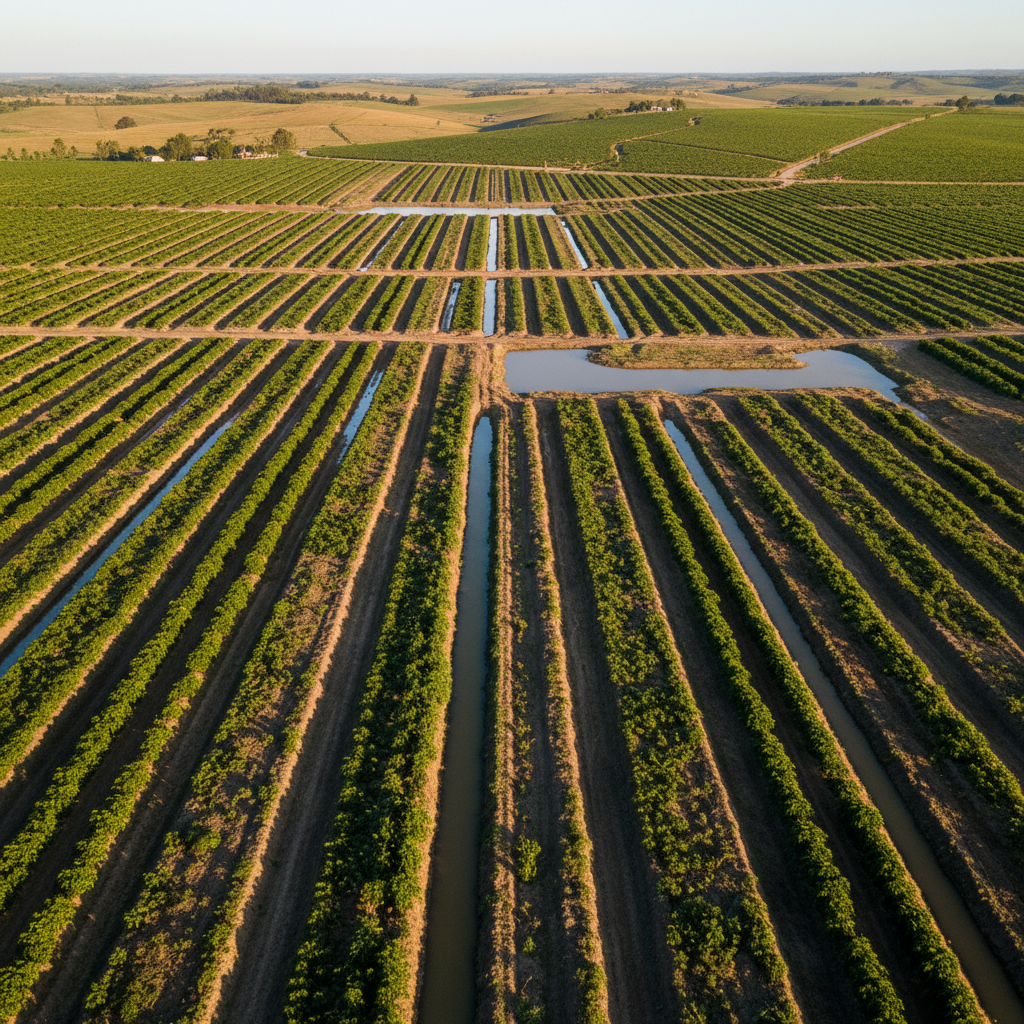
India is the world's second-largest agricultural producer — yet it captures only a fraction of the value it creates. The gap between what farmers earn and what consumers pay is not just a market inefficiency; it is a structural failure that costs the Indian economy an estimated ₹92,000 crore annually in post-harvest losses alone. At Shiva Consultancy Group, we have spent 17 years working inside this gap — with cooperatives, MSMEs, corporate landholders, and institutional investors across Gujarat, Rajasthan, Madhya Pradesh, Maharashtra, and seven other states. This article distills what we have learned about rebuilding agribusiness value chains that actually work.
Why Indian Agri Value Chains Break Down
The failure points are predictable and well-documented, yet they persist because they are systemic rather than operational. The core issues are fragmentation at the farm level (average holding size under 1.1 hectares), absence of cold-chain infrastructure in the last mile, information asymmetry between farmers and buyers, and a procurement system dominated by intermediaries who extract margin without adding value. The result is a value chain where the farmer captures 20–35% of the final consumer price for perishables — compared to 55–70% in developed agricultural economies.
- Average post-harvest loss for fruits and vegetables: 25–40% by weight
- Cold storage capacity covers less than 11% of India's perishable output
- Fewer than 8% of FPOs have active institutional buyer linkages
- APMC regulations still restrict direct farm-to-processor contracts in 9 states
The Structured Value Chain Advisory Approach
Our methodology begins with a value chain diagnostic — mapping every node from input procurement through production, aggregation, processing, logistics, and market access. We quantify the loss at each node, identify the structural cause, and design interventions that are financially viable for the client. The diagnostic typically takes 3–4 weeks and produces a prioritized action plan with ROI projections for each intervention. The most impactful interventions we have implemented fall into four categories: aggregation infrastructure (collection centers, sorting and grading facilities), institutional buyer linkage (direct contracts with processors, exporters, and retail chains), FPO formation and governance strengthening, and NABARD/government scheme access for capital subsidy.
- Value chain diagnostic: 3–4 weeks, covers all nodes from input to market
- Aggregation infrastructure design with capex and ROI modeling
- Institutional buyer linkage: direct contracts with processors and exporters
- FPO formation, governance, and collective bargaining support
Case Outcome: Horticulture Cooperative, Gujarat
A mid-size horticulture cooperative in Gujarat approached us in 2023 with a familiar problem: 40% post-harvest loss on tomatoes and capsicum, no institutional buyer relationships, and a working capital cycle that was strangling growth. Our intervention covered three phases over 18 months. Phase 1 was infrastructure: we designed and helped finance a 200-tonne pre-cooling and sorting facility using NABARD's RIDF scheme, reducing post-harvest loss to under 12%. Phase 2 was market linkage: we negotiated direct supply agreements with two institutional processors and one organized retail chain, eliminating three layers of intermediaries. Phase 3 was governance: we restructured the cooperative's board, implemented a digital procurement tracking system, and trained the management team on financial reporting. The outcome: ₹1.8 crore incremental revenue in Year 1, with a projected ₹4.2 crore by Year 3 as the infrastructure reaches full utilization.
What Institutional Investors Need to Understand
The agribusiness value chain opportunity in India is not primarily a technology story — it is an infrastructure and institutional capacity story. The highest-return interventions are often the least glamorous: a well-designed collection center, a properly governed FPO, a direct buyer contract. Investors who approach Indian agribusiness with a technology-first lens consistently underestimate the importance of ground-level relationship capital and regulatory navigation. The businesses that have scaled successfully in this space — whether in dairy, horticulture, or spices — have done so by building institutional infrastructure first, then layering technology on top.
The Policy Tailwind: What's Changing in 2025
Several policy developments are creating a more favorable environment for value chain investment. The PM-AASHA scheme has expanded price support mechanisms for oilseeds and pulses. The ONDC network is beginning to enable direct farm-to-consumer digital commerce at scale. The PLI scheme for food processing has unlocked ₹10,900 crore in committed investment. And the revised APMC model act, now adopted by 22 states, is enabling direct procurement contracts that were previously restricted. For businesses and investors positioned to move quickly, the next 24 months represent an unusually favorable entry window.
Conclusion
Rebuilding India's agribusiness value chain is not a single intervention — it is a multi-year institutional project that requires deep domain expertise, regulatory navigation capability, and the patience to build relationships at every node. The businesses that get this right will capture disproportionate value as India's food system modernizes. If you are evaluating an agribusiness investment or restructuring an existing operation, we would welcome a conversation about what a structured value chain diagnostic might reveal for your specific situation.
Discuss Your Project