HR Transformation in Indian Manufacturing: Building Workforce Capability at Scale
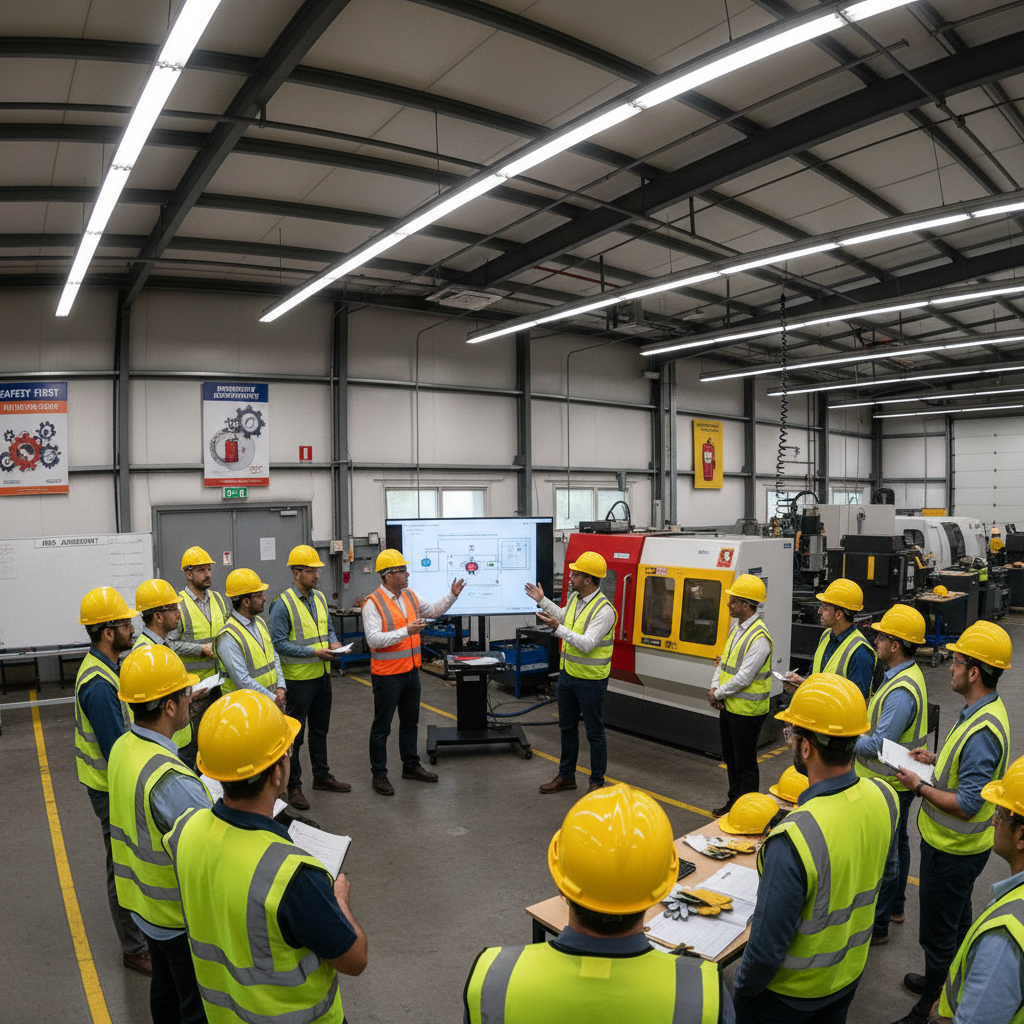
India's manufacturing sector employs 57 million people and is targeting 25% of GDP by 2025 under the Make in India initiative. Yet the sector faces a structural paradox: unemployment rates above 7% coexist with acute skill shortages that are constraining production capacity. The companies navigating this paradox successfully share a common approach: they treat HR transformation as a strategic investment, not an administrative function.
The Skill Gap: What the Data Shows
The National Skill Development Corporation estimates that India needs to skill 400 million workers by 2022 — a target that has been consistently missed. In manufacturing specifically, the gap is most acute in three areas: precision machining and CNC operation, quality management and statistical process control, and supervisory and team leadership skills. The consequence is a two-tier workforce: a small cadre of highly skilled workers commanding premium wages, and a large pool of semi-skilled workers whose productivity is constrained by inadequate training.
- Manufacturing skill gap: 400M workers need upskilling by 2025 (NSDC estimate)
- CNC and precision machining: 65% of manufacturers report critical shortages
- Quality management: only 18% of manufacturing workers have formal QC training
- Supervisory skills: 70% of first-line supervisors have no formal management training
The HR Transformation Framework
Our HR transformation framework for manufacturing clients covers four dimensions. Workforce planning: aligning headcount and skill mix with production requirements and growth plans. Competency architecture: defining the skills, knowledge, and behaviors required at each level of the organization. Learning and development: designing and delivering training programs that build capability efficiently. Performance management: creating systems that align individual performance with organizational goals and provide meaningful feedback. The framework is implemented over 12–18 months, with measurable milestones at each stage.
Leveraging Government Skill Development Schemes
One of the most underutilized levers in manufacturing HR transformation is government skill development funding. The Pradhan Mantri Kaushal Vikas Yojana (PMKVY) and the National Apprenticeship Promotion Scheme (NAPS) together provide funding for workforce training that can offset 60–80% of a company's training costs. We have helped 15 manufacturing clients access these schemes, reducing their training cost per employee from ₹8,000–12,000 to ₹1,500–3,000 while maintaining or improving training quality.
Conclusion
HR transformation in manufacturing is not a soft initiative — it is a hard-nosed investment in production capacity and competitive advantage. The companies that build genuine workforce capability will be better positioned to win contracts, meet quality standards, and scale production as India's manufacturing sector grows. We work with manufacturing companies of all sizes to design and implement HR transformation programs that deliver measurable productivity and quality improvements.
Discuss Your Project