PPP Advisory in India: Structuring Bankable Projects That Attract Private Capital
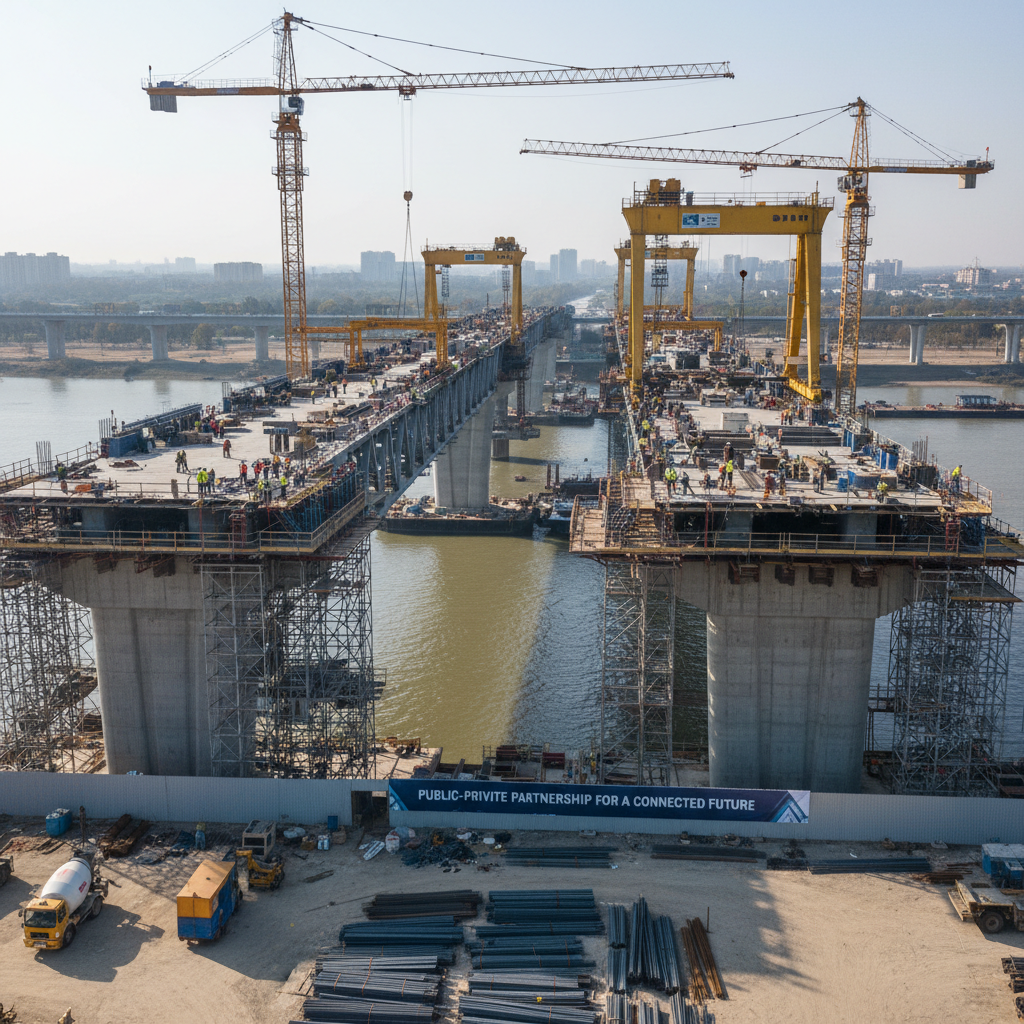
India's infrastructure deficit is well-documented: the country needs $1.4 trillion in infrastructure investment over the next decade to sustain its growth trajectory. Public budgets can fund perhaps 40% of this requirement. The balance must come from private capital — and the primary mechanism for mobilizing private capital for public infrastructure is the Public-Private Partnership. Yet PPP project pipelines across most Indian states are thin, and the projects that do reach financial close often take 3–5 years longer than necessary. The bottleneck is not political will or private sector appetite. It is project structuring.
Why PPP Projects Fail to Reach Financial Close
In our experience advising on PPP transactions across roads, ports, agri-infrastructure, and social infrastructure, the failure patterns are consistent. Unrealistic revenue projections: traffic studies and demand forecasts that are systematically optimistic, creating bankability problems when lenders apply their own stress tests. Poorly allocated risk: risk allocation frameworks that assign risks to the party least able to manage them, creating contingent liabilities that deter private investors. Inadequate viability gap funding: VGF calculations that don't reflect actual project economics, leaving a funding gap that kills transactions. And weak contract drafting: concession agreements with ambiguous force majeure provisions, inadequate dispute resolution mechanisms, and change-in-law clauses that create uncertainty.
- Revenue projection errors: 70% of PPP projects show >20% variance from forecast in Year 3
- Risk allocation: construction risk most commonly misallocated to public sector
- VGF gap: average Indian PPP project requires 15–25% VGF to achieve bankability
- Contract quality: ambiguous force majeure and change-in-law clauses deter lenders
The Bankability Framework
A bankable PPP project is one that a commercial lender will finance on project finance terms — without recourse to the government sponsor's balance sheet. Achieving bankability requires getting five elements right: a credible demand study with conservative base case and downside scenarios; a risk matrix that allocates each project risk to the party best positioned to manage it; a financial model that demonstrates debt service coverage above 1.3x in the base case and above 1.0x in the downside case; a concession agreement that provides lenders with step-in rights and adequate security; and a VGF structure that bridges the gap between project economics and required returns.
Agri-Infrastructure PPPs: The Emerging Opportunity
The most underexplored PPP opportunity in India is agri-infrastructure: cold chain networks, rural warehousing, food processing clusters, and market infrastructure. The government has committed ₹1 lakh crore to agri-infrastructure under the AIF scheme, but the PPP pipeline in this sector is thin. The opportunity exists because the demand fundamentals are strong, the government subsidy framework is generous, and the competition for private capital is limited. We have structured three agri-infrastructure PPP transactions in the past two years, with combined project value of ₹340 crore, and are actively developing a pipeline of similar transactions.
The Transaction Advisory Process
Our PPP transaction advisory process covers the full project lifecycle: pre-feasibility assessment (4–6 weeks), detailed feasibility and financial modeling (8–12 weeks), transaction structuring and documentation (12–16 weeks), and investor/lender marketing and financial close support (ongoing). The process is designed to minimize the time from concept to financial close — our target is 18–24 months for a well-structured project, compared to the industry average of 36–48 months.
Conclusion
PPP is not a financing mechanism of last resort — it is a tool for delivering better infrastructure faster and at lower cost to the public exchequer, when structured correctly. The states and sectors that crack the PPP code will attract disproportionate private capital and deliver infrastructure that transforms their economic competitiveness. We work with state governments, central agencies, and private developers to structure PPP transactions that achieve financial close and deliver on their development objectives.
Discuss Your Project