Plantation Management as a High-Return Asset Class: What Institutional Investors Need to Know

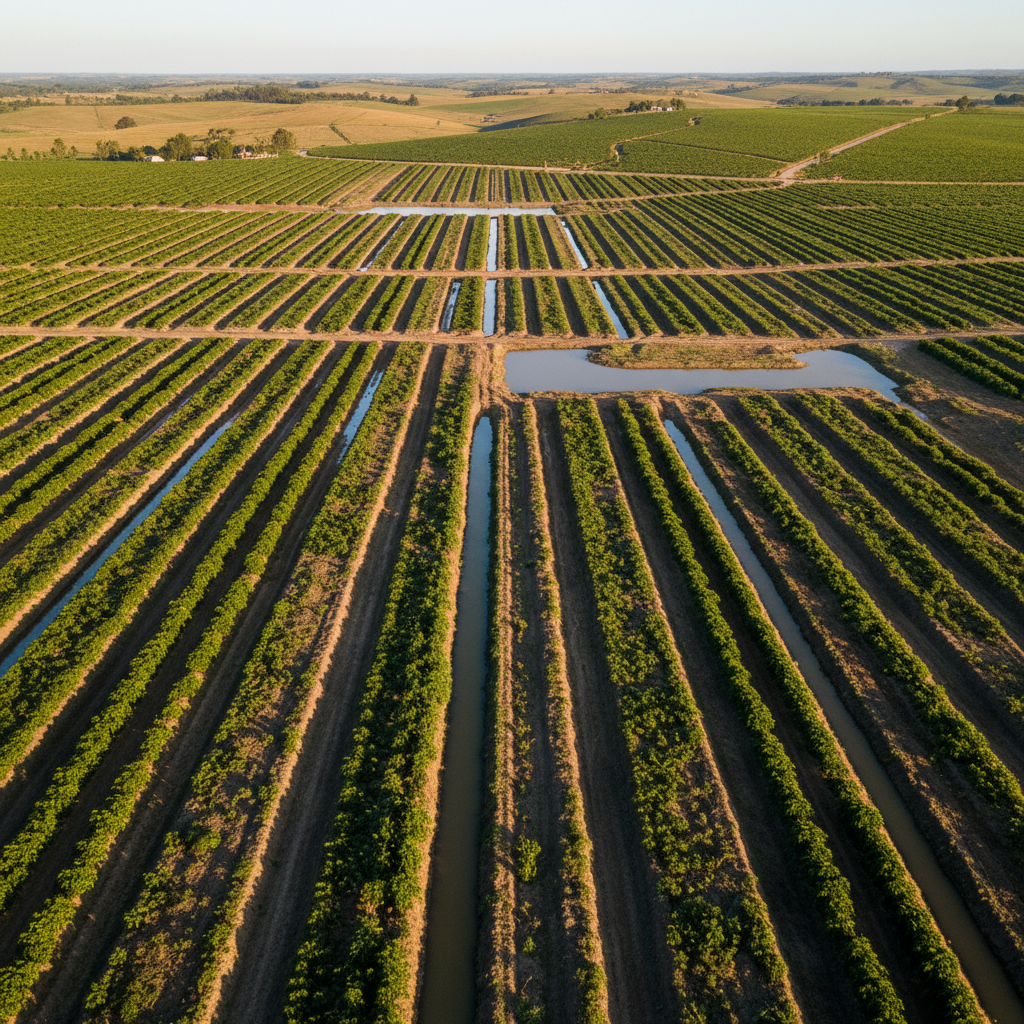
Plantation assets in India have historically been the domain of state forest corporations and small-scale farmers. That is changing. A combination of rising timber demand, favorable carbon credit economics, and improving land lease frameworks is attracting institutional capital to professionally managed plantation projects. The investors generating 14–22% IRR in this space share a common characteristic: they treat plantation management as an operational discipline, not a passive land holding.
The Investment Thesis
India's timber deficit is structural and growing. Domestic production meets less than 40% of industrial timber demand, with the gap filled by imports that cost the country $2.8 billion annually. The government's target of 33% forest cover (currently at 24%) and the National Agroforestry Policy create a policy tailwind for plantation investment. Meanwhile, the voluntary carbon market is creating an additional revenue stream for plantation projects that meet certification standards — adding 15–25% to project economics for well-structured investments.
- India timber deficit: 60% of industrial demand met by imports ($2.8B annually)
- Carbon credit potential: ₹800–1,200 per tonne CO2 for certified plantation projects
- Government target: 33% forest cover creates policy support for plantation expansion
- Bamboo market: ₹26,000 crore industry growing at 19% CAGR
Species Selection and Rotation Economics
The most critical investment decision in plantation management is species selection. The wrong species choice — driven by subsidy availability rather than market demand — is the single largest cause of plantation investment underperformance. Our species selection framework evaluates four dimensions: market demand and price trajectory, site suitability (soil, rainfall, temperature), rotation period and capital cycle, and regulatory environment (some species require felling permits that create exit risk). The highest-performing species combinations we have worked with are teak-bamboo intercropping (8–10 year rotation, 16–19% IRR), eucalyptus for pulp (5–7 year rotation, 14–17% IRR), and specialty timber (rosewood, mahogany) for premium markets (12–15 year rotation, 18–22% IRR).
Operational Management: Where Returns Are Made or Lost
The difference between a 12% and a 20% IRR in plantation investment is almost entirely operational. The key operational variables are survival rate (target: >85% at year 3), growth rate (measured against species benchmarks), input efficiency (fertilizer and water use per unit of biomass), and pest and disease management. Professional plantation management — with trained field staff, regular monitoring, and data-driven intervention — consistently delivers 25–35% higher biomass yield than unmanaged or poorly managed plantations. This yield differential is the primary driver of return differentiation.
Conclusion
Plantation investment in India is entering a new phase of institutional maturity. The investors who move now — with professional management frameworks and the right advisory support — will establish positions in an asset class that is likely to see significant capital inflows over the next decade. We work with institutional investors, family offices, and corporate landholders to design, implement, and manage plantation projects that deliver both financial returns and measurable environmental impact.
Discuss Your Project